

Real-time heartbeat listening · Guided audio
Listen toyour heart.
Hear your own heart, as it beats, through headphones — guided by a voice developed by psychiatrist Dr. Klemen Rebolj.
01 · The idea
Your heart has beaten all your life. Most of the time, you don’t hear it. With Enso you hear it live — through headphones, alongside a professionally guided text.
An experience, not a device
The device is simple.
You hear your heart.
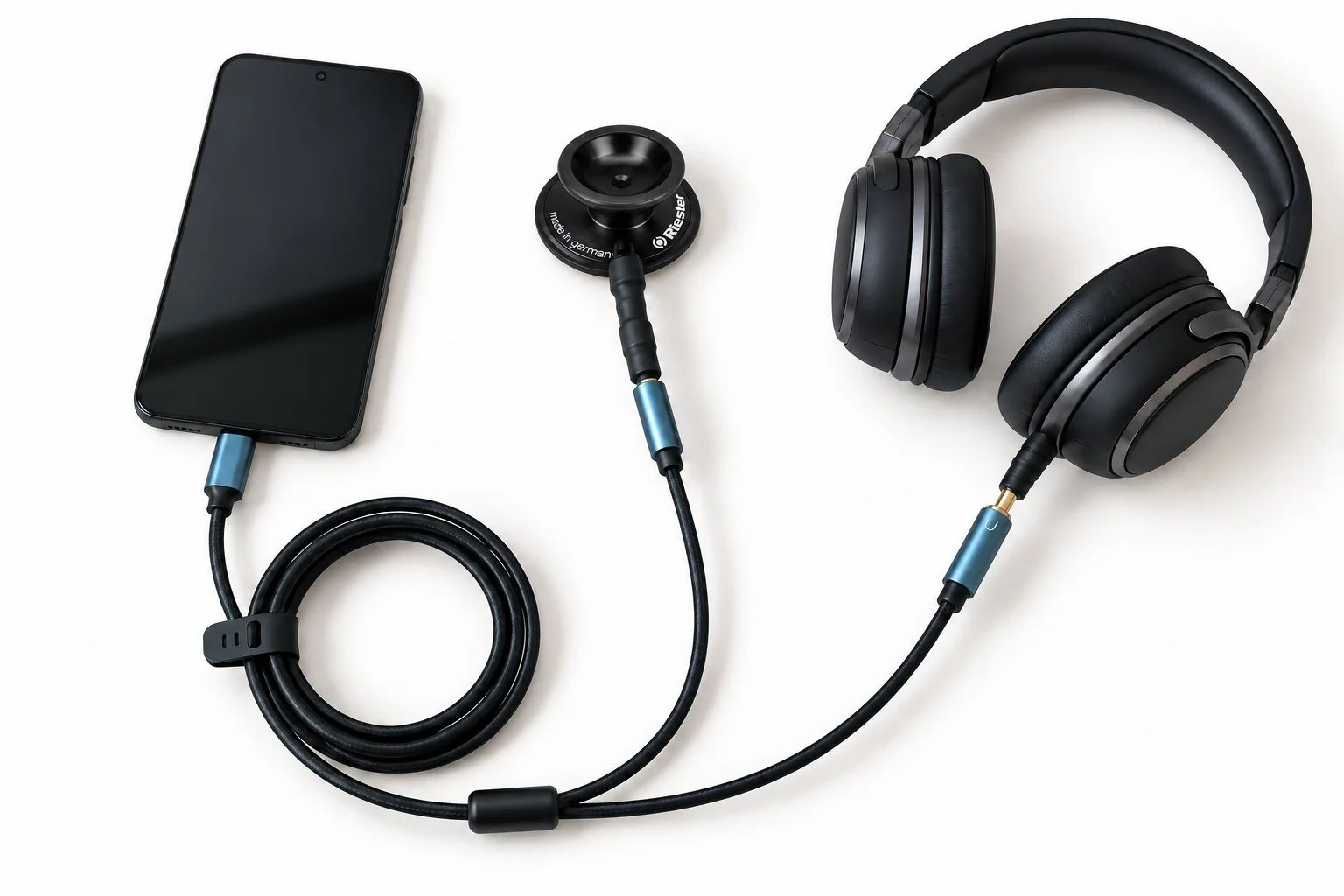
A Riester stethoscope head, one cable to your phone, and your own headphones. That's all it takes to hear your heart.
02 · The experience
Three steps.
No experience needed.
Sit or lie down somewhere quiet and put on headphones. The app guides you from there.
Stethoscope connected
Listen to your heartConnect
Open the Enso Heart app and choose how to pick up your heartbeat: your phone's microphone, the Enso listening device or a Polar H10. Put on headphones.
Listen
You hear your own heart in real time — not music, not an external sound — alongside a therapeutically guided voice.
Notice
While listening, many people notice their breathing slow down and their body settle.
03 · Two ways in
At home. Or together.
At home
Enso Heart
App
Free to start: heartbeat listening and your first guided sessions — a shorter (≈10 min) and a longer (≈30 min) relaxation.
Together · Ljubljana
Enso
Experiences
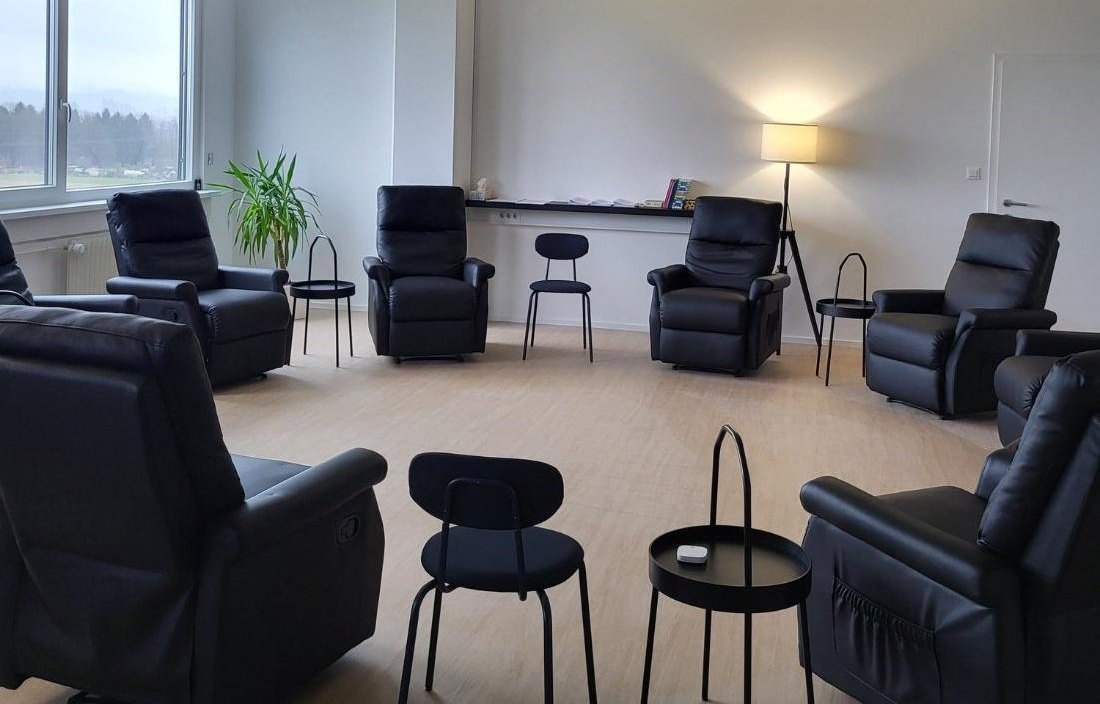
Guided by Enso mentors: listening to your heart and talking through the experience — individually, as a couple or in a group.
04 · Heart ↔ brain
Heart
and brain.
Heart and brain are in constant exchange through the vagus nerve — and most of its fibres carry signals upward, from body to brain. Slow breathing makes the heart speed up and slow down with each breath. That variation is HRV. Listening with Enso, you can hear how your heart rhythm changes with your breathing.
The time between beats lengthens and shortens with the breath. At rest, more variation is generally associated with a more flexible autonomic nervous system.
Each dot is a heartbeat. At around 5–8 breaths a minute, heart rate and breathing tend to move in step — the basis of HRV biofeedback.
When heart rhythm and breath align, the heart's variation gathers into one smooth wave — a single clear peak near 0.1 Hz.
Illustrative visualisations — not live or personal data.
05 · Foundations
Grounded
in research.
The core mechanism is the link between heart rhythm, breathing and the autonomic nervous system. Below, we separate what is well established in general research from what we are still studying about the Enso method.
Breaths per minute
The slow-breathing range in which heart rate variability often increases and the baroreflex is strengthened.
What research shows
- Interoception — perceiving signals from inside the body — is an active field in psychology and neuroscience, linked to emotional awareness and regulation.
- Slow breathing of about 5–8 breaths a minute often increases heart rate variability (HRV) and strengthens the baroreflex.
- HRV biofeedback studies report reductions in stress and anxiety, especially when breathing, attention and bodily feedback are combined.
Hearing, not watching
- Classic biofeedback shows numbers on a screen. With Enso you hear the signal itself — the sound of your own body.
- Heart coherence, a steadier rhythm in step with the breath, arises experientially rather than as a target to hit.
- Listening supports interoception, bodily presence and a calmer stress response.
What we are studying
- Participants most often describe better sleep, more calm and presence through the day, and a clearer sense of their needs and energy.
- A 12-week pilot study of the Enso group programme found reductions in burnout and depression and a stronger sense of connection with oneself and the group — first data, not yet proof. Research continues.
- See the pilot results
- Read our articles
Enso does not replace medical or psychotherapeutic treatment. It can meaningfully complement it as an experiential practice of bodily presence, relaxation and inner regulation.
The Enso method in depth06 · Origin
“How do you help a person move from the head into the body — from understanding into feeling?”
As a psychiatrist and psychotherapist, Dr. Klemen Rebolj saw conversation reach its limit: people understood what was happening to them, yet the body stayed tense. He looked for a direct bodily signal — personal, living, rhythmic and safe. The heartbeat became the centre of the Enso method.
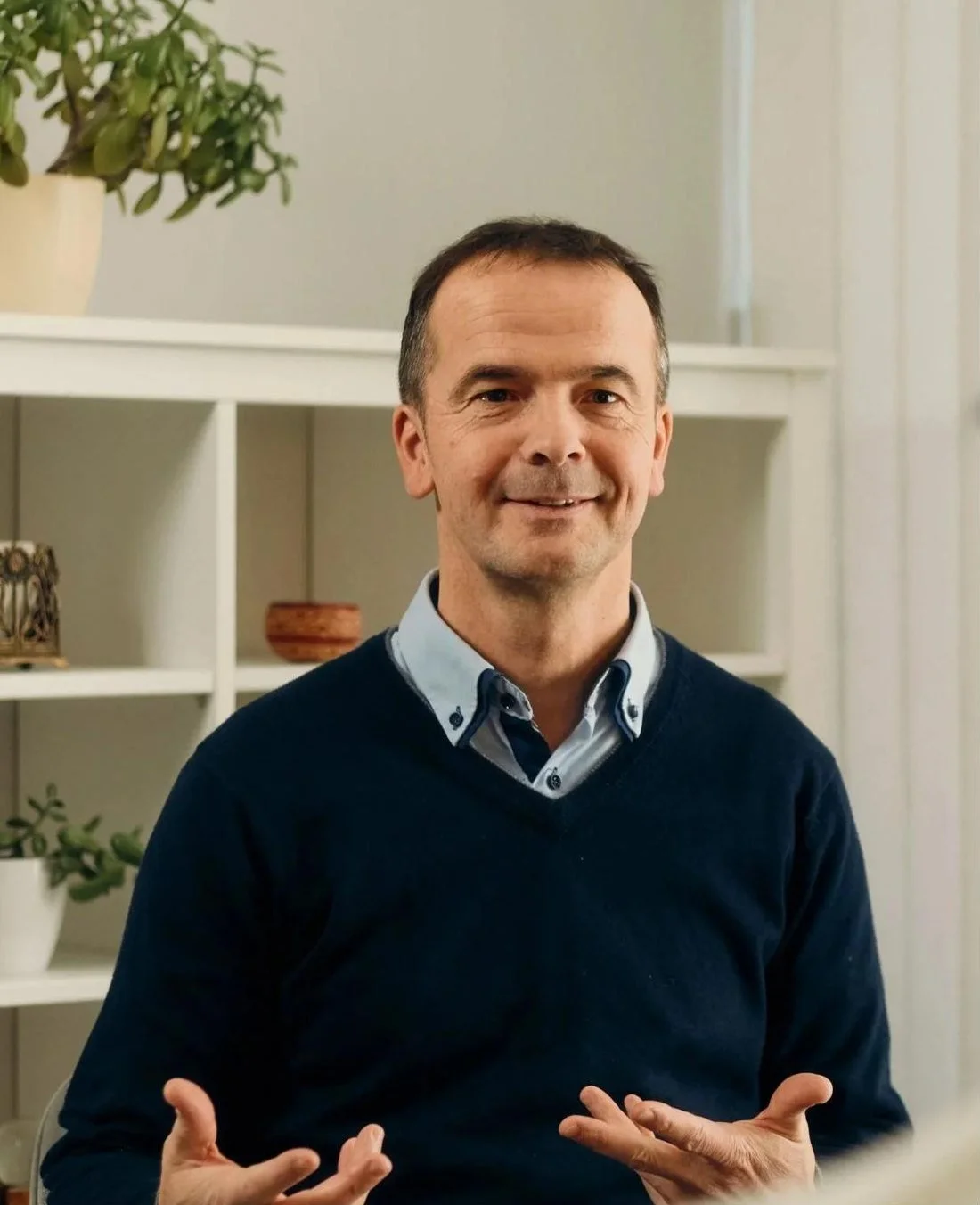
Enso-Heart d.o.o. develops a purpose-built digital stethoscope and programmes for listening to your own heartbeat — so more people can have this practice at home, with mentoring alongside. Co-financed by the European Union.
Meet the team07 · For organisations
Enso for teams, wellness & hospitality.
A shared listening experience for calming down, reconnecting, restoring focus and preventing burnout.
Try
Enso at home or in person.
Begin at home for free, or join a guided session in Ljubljana.
Real-time heartbeat listening · Guided audio
Listen toyour heart.
Hear your own heart, as it beats, through headphones — guided by a voice developed by psychiatrist Dr. Klemen Rebolj.
01 · The idea
Your heart has beaten all your life. Most of the time, you don’t hear it. With Enso you hear it live — through headphones, alongside a professionally guided text.
An experience, not a device
The device is simple.
You hear your heart.
A Riester stethoscope head, one cable to your phone, and your own headphones. That's all it takes to hear your heart.
02 · The experience
Three steps.
No experience needed.
Sit or lie down somewhere quiet and put on headphones. The app guides you from there.
Stethoscope connected
Listen to your heartConnect
Open the Enso Heart app and choose how to pick up your heartbeat: your phone's microphone, the Enso listening device or a Polar H10. Put on headphones.
Listen
You hear your own heart in real time — not music, not an external sound — alongside a therapeutically guided voice.
Notice
While listening, many people notice their breathing slow down and their body settle.
03 · Two ways in
At home. Or together.
At home
Enso Heart
App
Free to start: heartbeat listening and your first guided sessions — a shorter (≈10 min) and a longer (≈30 min) relaxation.
Together · Ljubljana
Enso
Experiences
Guided by Enso mentors: listening to your heart and talking through the experience — individually, as a couple or in a group.
04 · Heart ↔ brain
Heart
and brain.
Heart and brain are in constant exchange through the vagus nerve — and most of its fibres carry signals upward, from body to brain. Slow breathing makes the heart speed up and slow down with each breath. That variation is HRV. Listening with Enso, you can hear how your heart rhythm changes with your breathing.
The time between beats lengthens and shortens with the breath. At rest, more variation is generally associated with a more flexible autonomic nervous system.
Each dot is a heartbeat. At around 5–8 breaths a minute, heart rate and breathing tend to move in step — the basis of HRV biofeedback.
When heart rhythm and breath align, the heart's variation gathers into one smooth wave — a single clear peak near 0.1 Hz.
Illustrative visualisations — not live or personal data.
05 · Foundations
Grounded
in research.
The core mechanism is the link between heart rhythm, breathing and the autonomic nervous system. Below, we separate what is well established in general research from what we are still studying about the Enso method.
Breaths per minute
The slow-breathing range in which heart rate variability often increases and the baroreflex is strengthened.
What research shows
- Interoception — perceiving signals from inside the body — is an active field in psychology and neuroscience, linked to emotional awareness and regulation.
- Slow breathing of about 5–8 breaths a minute often increases heart rate variability (HRV) and strengthens the baroreflex.
- HRV biofeedback studies report reductions in stress and anxiety, especially when breathing, attention and bodily feedback are combined.
Hearing, not watching
- Classic biofeedback shows numbers on a screen. With Enso you hear the signal itself — the sound of your own body.
- Heart coherence, a steadier rhythm in step with the breath, arises experientially rather than as a target to hit.
- Listening supports interoception, bodily presence and a calmer stress response.
What we are studying
- Participants most often describe better sleep, more calm and presence through the day, and a clearer sense of their needs and energy.
- A 12-week pilot study of the Enso group programme found reductions in burnout and depression and a stronger sense of connection with oneself and the group — first data, not yet proof. Research continues.
- See the pilot results
- Read our articles
Enso does not replace medical or psychotherapeutic treatment. It can meaningfully complement it as an experiential practice of bodily presence, relaxation and inner regulation.
The Enso method in depth06 · Origin
“How do you help a person move from the head into the body — from understanding into feeling?”
As a psychiatrist and psychotherapist, Dr. Klemen Rebolj saw conversation reach its limit: people understood what was happening to them, yet the body stayed tense. He looked for a direct bodily signal — personal, living, rhythmic and safe. The heartbeat became the centre of the Enso method.
Enso-Heart d.o.o. develops a purpose-built digital stethoscope and programmes for listening to your own heartbeat — so more people can have this practice at home, with mentoring alongside. Co-financed by the European Union.
Meet the team07 · For organisations
Enso for teams, wellness & hospitality.
A shared listening experience for calming down, reconnecting, restoring focus and preventing burnout.
Try
Enso at home or in person.
Begin at home for free, or join a guided session in Ljubljana.