

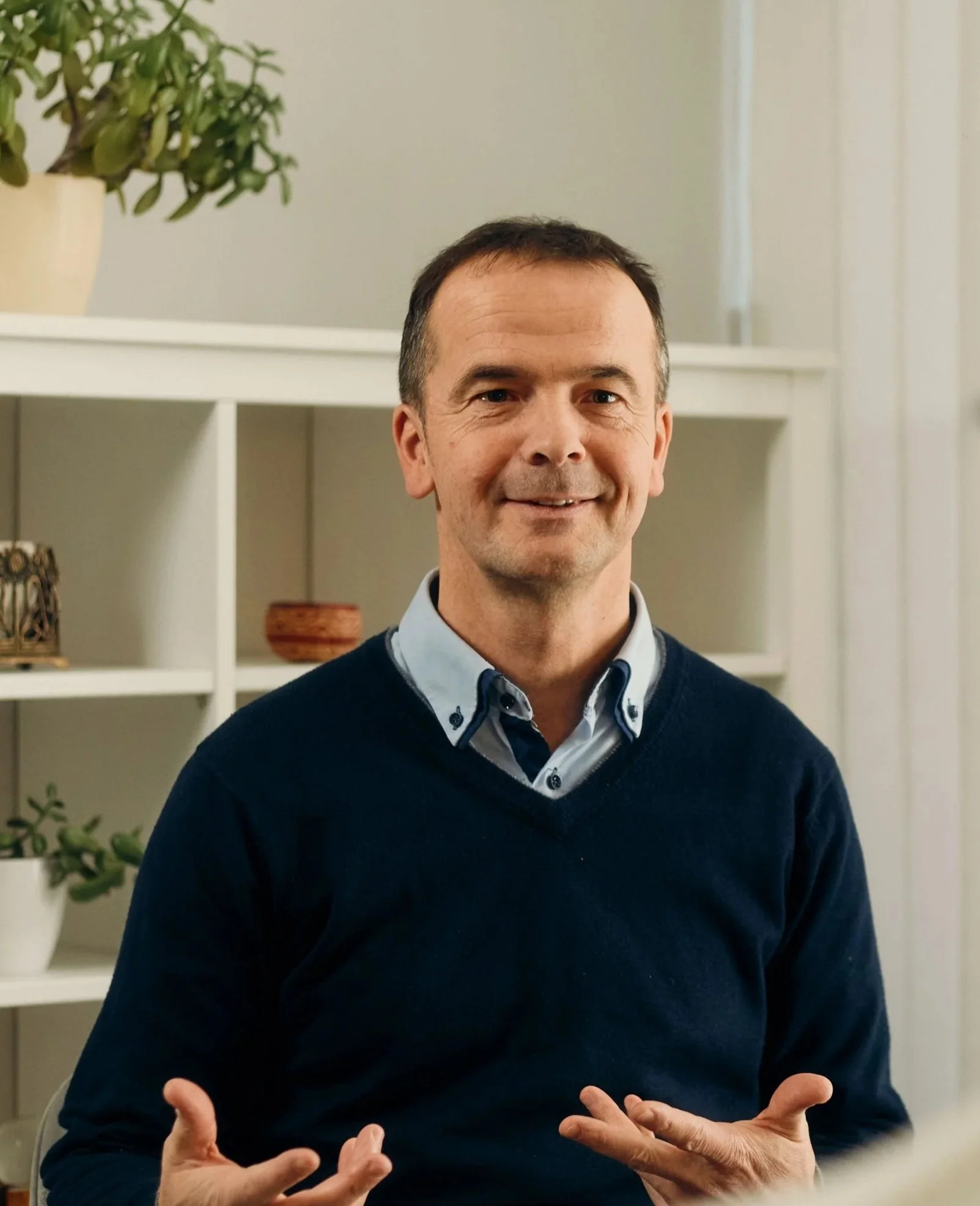
Klemen Rebolj, MD, Specialist in Psychiatry
Klemen developed the Enso Method from a simple yet profound therapeutic question: How can we help a person move from the mind into the body — from tension to connection, from stress to calm, from understanding to feeling?
As a psychiatrist and psychotherapist, he observed that conversation can sometimes reach its limits. A person may understand what is happening to them, yet the body can remain tense, fearful, closed off, or overwhelmed. This led him to explore a different approach — one that brings a direct bodily signal into the therapeutic process: something deeply personal, alive, rhythmic, and grounding.
The heartbeat became a central element of the Enso Method because it connects us with one of the most fundamental signs of life: our own rhythm. When we hear our own heart, attention naturally begins to return to the body. The rhythm of the heartbeat becomes an anchor — supporting the body in settling, the breath in deepening, and our inner experience in becoming more accessible.
Founder of the Enso Method

What is the Enso Method?
Using the Enso Heart app and headphones, you listen to the rhythm of your own heart while a guided practice gradually directs your attention inward.
The heartbeat becomes an anchor — helping to quiet mental distraction, deepen awareness of the body, and create a greater sense of inner presence.
No previous experience is needed. Simply sit or lie down comfortably, listen to the rhythm of your heart, and allow your body to gradually settle into a state of calm.
The Enso Method is a guided experience of listening to your own heartbeat, using the rhythm of the heart, focused attention, and therapeutically guided practices to support deep relaxation, body awareness, and a sense of inner calm.
How Does the Enso Method Affect the Body?
From a physiological perspective, one of the key mechanisms is the interaction between heart rhythm, breathing, and the autonomic nervous system. Slow, relaxed breathing — typically around 5–8 breaths per minute — can increase heart rate variability (HRV) and strengthen baroreflex activity, a mechanism involved in regulating blood pressure and heart rate.
In the Enso Method, heart coherence refers to a state in which heart rhythm becomes more organized and synchronized with breathing and autonomic regulation. Greater coherence is associated with a physiological state that can support calm, focused attention, and a sense of internal balance.
Unlike traditional HRV biofeedback, Enso approaches this process in a more experiential way: instead of only observing data or numbers on a screen, you directly hear the rhythm of your own heart.
This kind of heartbeat listening may support interoceptive awareness, greater presence in the body, and physiological self-regulation. Research on HRV biofeedback suggests that practices combining paced breathing, focused attention, and physiological feedback may help reduce stress, anxiety, and related psychophysiological symptoms.
The heartbeat acts as a direct signal from the body. Rather than listening to an external sound, a generic meditation, or abstract music, you are listening to something uniquely your own — the sound of your own body.
How to Practice the Enso Method
Practice the Enso Method in a quiet, comfortable space. Put on your headphones and listen to your own heartbeat while following a therapeutically guided practice of your choice. In the Enso Heart app, these guided practices can be found under Meditations.
The experience is designed to support relaxation, body awareness, connection with your inner experience, and a deeper awareness of your feelings and emotions.
After listening, take a few minutes for reflection. Notice what you experienced during the practice: How did you perceive your heartbeat, your breathing, and your body? You may also write down any feelings, thoughts, images, sensations, or ideas that emerged during the experience.
Who Is the Enso Method For?
The Enso Method is designed for individuals, groups, and organizations seeking to cultivate greater calm, presence, connection with themselves, and resilience to stress. It may be particularly valuable for people experiencing tension, overwhelm, mental restlessness, or simply a need for deeper relaxation and reconnection.
People who practice heartbeat listening often describe experiences such as feeling calmer and more present throughout the day, becoming more aware of their needs and personal limits, sleeping more restfully, and feeling more connected to themselves and their inner experience.
In organizations, the Enso Method can be used as an experiential practice to support relaxation, connection, renewed focus, and wellbeing in the context of burnout prevention.
On a personal level, it can support body awareness, emotional self-regulation, and the process of reconnecting with yourself.
The Enso Method is not a substitute for medical care or psychotherapy. It can, however, complement professional support as an experiential practice focused on body awareness, relaxation, and self-regulation.